
Revenue Cycle Performance Defines CAH Survival
Critical Access Hospitals (CAHs) operate on some of the thinnest margins in healthcare. With 25 or fewer beds and cost-based Medicare reimbursement, every dollar of revenue matters. Yet many CAHs lack the benchmarking infrastructure to know whether their revenue cycle is performing well or bleeding money.
The difference between a well-managed revenue cycle and a struggling one can easily exceed $1 million annually for a 25-bed CAH. That gap is the difference between keeping the doors open and joining the growing list of rural hospital closures.
The Five Metrics That Matter Most
Days in Accounts Receivable (A/R) measures how quickly you collect payment after providing services. The national median for CAHs is approximately 45-55 days. Top-performing CAHs, particularly those with MSO support, consistently achieve under 35 days. Every day above that benchmark represents cash sitting in your revenue cycle instead of your operating account.
Clean Claim Rate measures the percentage of claims accepted on first submission without rejection or denial. The target is 95% or higher. CAHs averaging below 90% are losing significant revenue to rework costs and delayed payments. Each rejected claim costs between $25 and $118 to rework, depending on complexity.
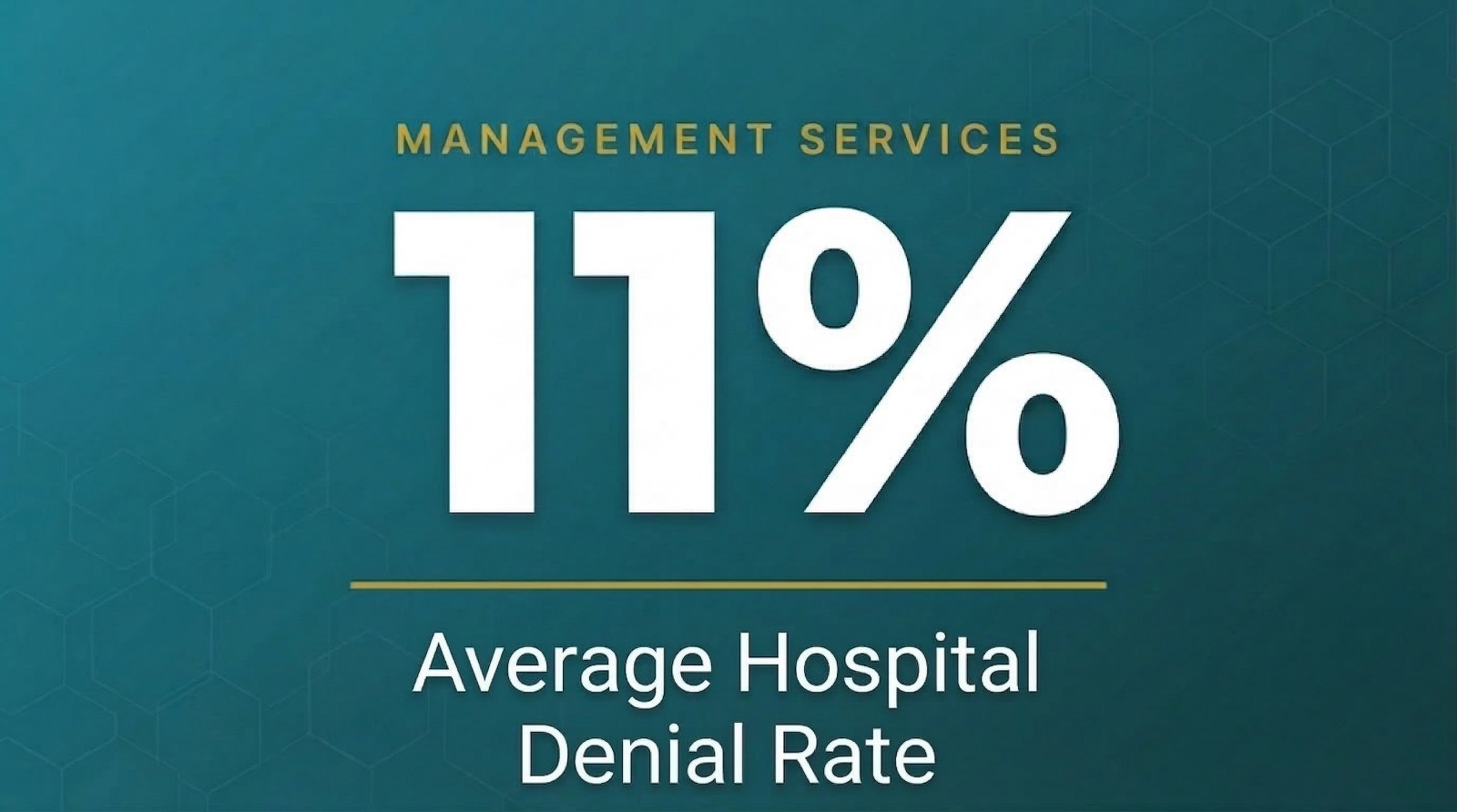
Denial Rate tracks the percentage of claims denied by payers. The national average across all hospitals sits around 11%. MSO-supported organizations routinely achieve denial rates below 3%. For a CAH with $30 million in annual revenue, reducing the denial rate from 11% to 3% recovers approximately $2.4 million.
Net Collection Rate measures the percentage of collectible revenue actually collected. The target is 96% or higher. This metric reveals whether your team is effectively pursuing all available revenue or leaving money on the table through write-offs and timely filing failures.
Cost to Collect measures the total cost of your revenue cycle operation as a percentage of net patient revenue. The HFMA best-practice benchmark is 2-4%. CAHs spending 7% or more on revenue cycle functions should evaluate whether outsourced RCM would deliver better results at lower cost.
Why CAH Benchmarks Differ from Large Hospital Benchmarks
CAHs face unique revenue cycle challenges that make national hospital benchmarks misleading. Cost-based reimbursement for Medicare means CAHs must meticulously document costs to maximize reimbursement through the Medicare cost report. Errors in cost reporting directly reduce revenue.
Payer mix in rural areas often skews heavily toward Medicare and Medicaid, with limited commercial insurance volume. This means the margin cushion that commercial rates provide to urban hospitals is largely absent for CAHs.
Staffing constraints compound the problem. Many CAHs cannot afford dedicated coding, billing, and compliance staff. Revenue cycle functions are often split across administrative employees who handle multiple roles. This fragmentation leads to higher error rates and slower collections.
These structural realities make specialized RCM support even more valuable for CAHs than for their urban counterparts.
How MSO-Supported CAHs Outperform
CAHs that partner with MSOs for revenue cycle management gain access to dedicated billing teams, automated claims scrubbing technology, denial management specialists, and Medicare cost report expertise. The fixed-cost model of MSO partnership replaces the unpredictable costs of internal staffing.
The technology advantage alone is significant. AI-powered claims scrubbing catches errors before submission. Automated denial tracking identifies patterns and root causes. Real-time dashboards give administrators visibility into revenue cycle performance without waiting for month-end reports.
The result is not just better metrics. It is more predictable cash flow, which is the single most important factor in CAH financial stability.
Start With a Baseline Assessment
If your CAH does not currently track these five metrics with monthly precision, that is the first step. You cannot improve what you do not measure. Pull your current data, compare it against the benchmarks above, and identify where the largest gaps exist.
Those gaps represent your most immediate revenue recovery opportunity. For many CAHs, the revenue recovered through improved RCM performance more than covers the cost of MSO partnership, creating a net positive financial impact from day one.
━━━━━━━━━━━━━━━━━━━━━━━━━━━━━━━━━━━━━━━━━━━━━━━━━━
Nexwell Health Partners provides management services, telehealth solutions, and compliance support for safety-net hospitals, FQHCs, and specialty practices. Contact us to schedule a consultation.
Sources