
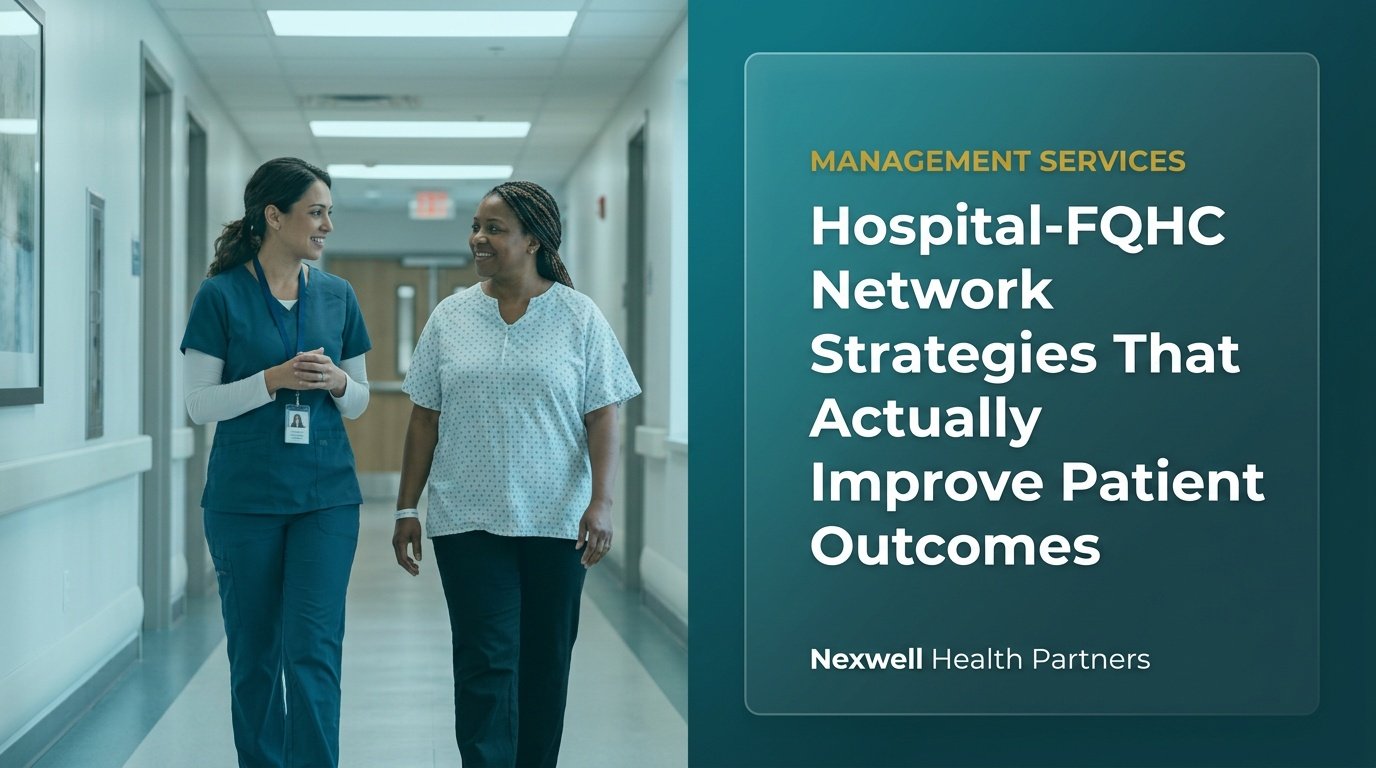
Beyond the Handshake Agreement
Hospitals and FQHCs have been talking about collaboration for decades. Community benefit reports mention FQHC partnerships. Strategic plans reference “safety-net alignment.” But in most markets, the actual operational integration between hospitals and FQHCs remains thin.
Patients experience this gap directly. They’re discharged from the hospital with follow-up instructions that assume they have a primary care provider. The FQHC gets a faxed discharge summary three days later, if it gets one at all. The patient falls through the transition, and 30 days later, they’re back in the ED.
The hospitals and FQHCs that have broken this pattern didn’t do it with good intentions. They did it with operational infrastructure.
Shared Care Coordination Models
The most effective hospital-FQHC networks operate with embedded care coordinators who work across both organizations.
In practice, this means a hospital-employed care coordinator who has access to the FQHC’s scheduling system and can book follow-up appointments before the patient leaves the hospital floor. Or an FQHC community health worker with access to the hospital’s ADT (admission, discharge, transfer) notifications who can proactively reach out to patients within 48 hours of discharge.
These aren’t hypothetical models. Health systems that have implemented bidirectional ADT notifications with FQHC partners have shown measurable reductions in 30-day readmission rates. The key is not the technology. It’s the workflow that acts on the data.
Financial Alignment Through Value-Based Arrangements
Fee-for-service creates misaligned incentives between hospitals and FQHCs. The hospital generates revenue from admissions and ED visits. The FQHC generates revenue from ambulatory visits. Neither organization has a direct financial incentive to reduce the other’s volume.
Value-based arrangements change this equation. When a hospital participates in a Medicare Shared Savings Program ACO or a Medicaid managed care arrangement with quality-linked payments, reducing avoidable admissions and ED visits becomes a shared financial objective.
The network strategy that works is to include FQHC partners in the value-based arrangement. Share the savings generated by better care transitions. Give the FQHC a financial stake in the hospital’s readmission rate. When both organizations benefit from keeping patients healthy and out of the hospital, the collaboration becomes self-sustaining.
EHR Interoperability: The Minimum Viable Connection
Full EHR integration between hospitals and FQHCs is expensive and technically complex. Most organizations don’t need it.
The minimum viable connection requires three capabilities: real-time ADT notifications from the hospital to the FQHC, a shared care plan accessible to both organizations for patients they have in common, and a referral management system that tracks the loop from referral to appointment to outcome.
Healthcare Information Exchange (HIE) participation can provide the first two. Many states have operational HIEs that both hospitals and FQHCs can connect to for relatively modest cost. If your state HIE supports event notifications and document sharing, that’s your fastest path to interoperability.
The referral loop is harder because it requires workflow changes on both sides. But a referral that’s sent and never completed is worse than no referral at all, because it creates a false sense of follow-up.
Making the Business Case
Hospital CFOs will ask what the FQHC partnership costs and what it returns. The answer depends on your payer mix and value-based contracts, but the typical financial case includes several components.
Reduced uncompensated care costs when uninsured patients are connected to FQHC services with sliding fee scale support. Lower readmission penalties under the Hospital Readmissions Reduction Program. Shared savings from ACO or managed care arrangements. Improved community benefit reporting for IRS Schedule H.
The hospitals that build the strongest FQHC networks don’t treat them as charity. They treat them as a core part of their population health strategy with measurable returns.
━━━━━━━━━━━━━━━━━━━━━━━━━━━━━━━━━━━━━━━━━━━━━━━━━━
Nexwell Health Partners provides management services, telehealth solutions, and compliance support for safety-net hospitals, FQHCs, and specialty practices. Contact us to schedule a consultation.
Sources