
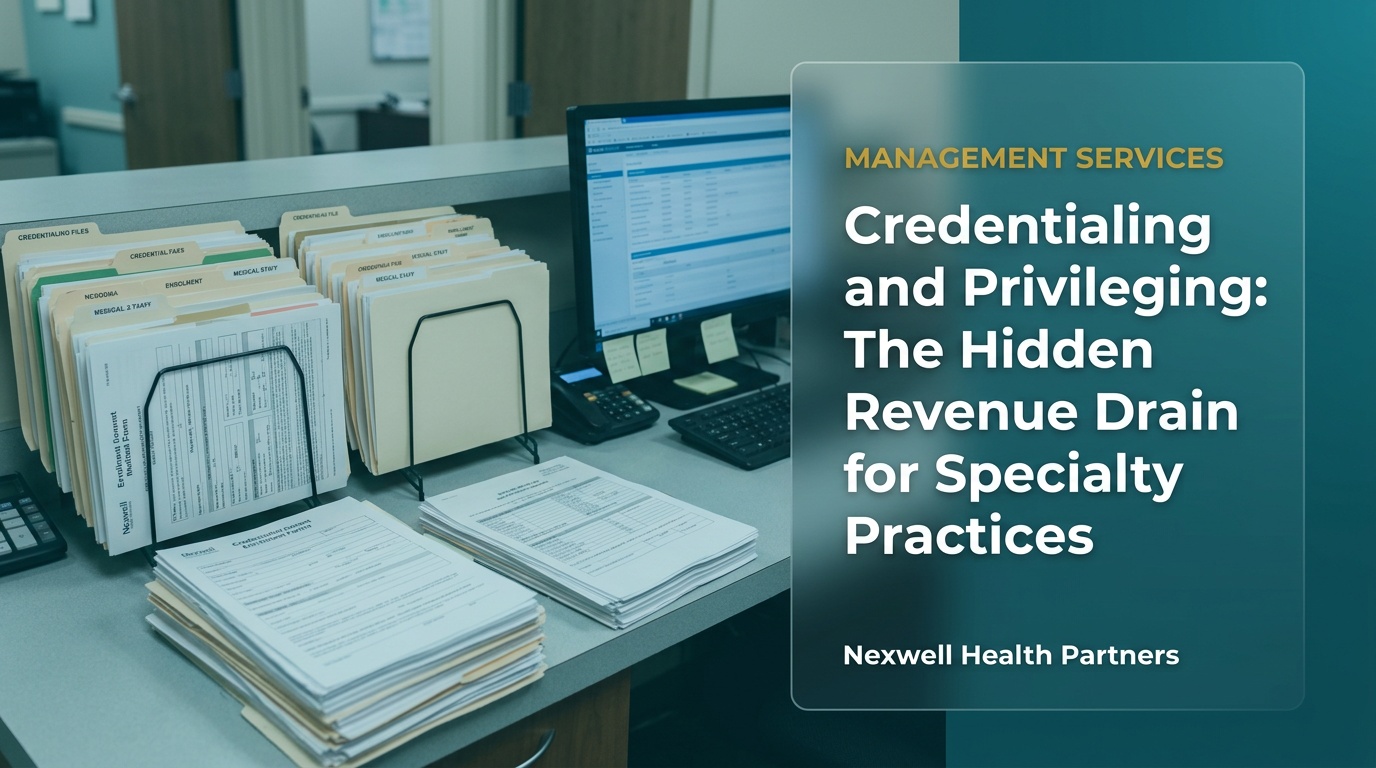
The $50,000-Per-Provider Problem
Every day a physician isn’t credentialed with a payer is a day of lost revenue. For a specialty practice, that number adds up fast.
A new cardiologist generating $4,000 per day in professional fees who waits 90 days for credentialing represents $360,000 in delayed revenue. If the practice can’t bill retroactively, some of that revenue is lost permanently.
Multiply this across multiple providers, multiple payers, and multiple hospital affiliations, and credentialing becomes one of the largest silent revenue drains in specialty practice operations.
Why Credentialing Breaks Down
The credentialing process is fundamentally a documentation exercise, but it’s one that touches dozens of external organizations with different requirements, timelines, and platforms.
A typical specialist needs to be credentialed with 10 to 20 commercial payers, enrolled in Medicare and Medicaid, and privileged at one to four hospitals. Each entity has its own application, its own primary source verification requirements, and its own processing timeline.
The breakdown usually happens in one of three places. Incomplete applications that get kicked back, adding 30 to 60 days to the process. Expired documents that weren’t renewed before the credentialing cycle began. And lack of follow-up, where an application sits in a payer’s queue for weeks without anyone checking on its status.
These aren’t complex problems. They’re process failures that a dedicated credentialing function can prevent.
The Re-Credentialing Trap
Initial credentialing gets attention because it affects new provider revenue. Re-credentialing gets neglected because it affects existing providers who are already billing.
Until they’re not. A missed re-credentialing deadline can result in automatic termination from a payer network. The practice doesn’t find out until claims start denying. By then, the provider may need to go through the full initial credentialing process again, which can take four to six months with some payers.
Re-credentialing cycles vary by payer but typically occur every two to three years. A practice with 15 providers credentialed with 15 payers has approximately 225 re-credentialing events to track over a three-year period. Without a systematic tracking system, deadlines will be missed.
Centralizing Credentialing Through an MSO
The MSO model for credentialing works because it creates a dedicated, centralized function that doesn’t compete with clinical operations for attention.
An MSO-managed credentialing program maintains a single source of truth for every provider’s credentials: licenses, DEA registrations, board certifications, malpractice insurance, hospital privileges, and payer enrollments. The system tracks every expiration date and triggers renewal workflows 90 days before expiration.
For initial credentialing, the MSO begins the process before the provider’s start date, runs parallel applications to multiple payers simultaneously, and follows up on a defined schedule. The target is to complete initial credentialing within 60 days for commercial payers and 90 days for Medicare and Medicaid.
For re-credentialing, the MSO maintains a rolling calendar, initiates applications 120 days before expiration, and escalates delays before they become terminations.
Measuring Credentialing Performance
Practices that outsource credentialing should track four key performance indicators.
Time to initial credentialing, measured from application submission to effective date, by payer. Average days to complete re-credentialing, with a target of zero lapses. Revenue impact, measured as the estimated revenue recovered by reducing time to credentialing for new providers. Error rate, measured as the percentage of applications returned for corrections.
The financial case is straightforward. If centralizing credentialing through an MSO reduces average time-to-credential by 30 days for each new provider, and the practice adds three specialists per year, the revenue acceleration alone justifies the cost.
━━━━━━━━━━━━━━━━━━━━━━━━━━━━━━━━━━━━━━━━━━━━━━━━━━
Nexwell Health Partners provides management services, telehealth solutions, and compliance support for safety-net hospitals, FQHCs, and specialty practices. Contact us to schedule a consultation.
Sources