
The Billing Rules Nobody Reads Until the Audit
FQHCs and Rural Health Clinics operate under a unique payment methodology that doesn’t follow the standard Medicare Physician Fee Schedule. FQHCs are paid a prospective payment system rate per visit. RHCs are paid an all-inclusive rate.
When telehealth entered the picture, these unique payment structures created billing complexities that don’t exist for other provider types. And those complexities are where the most expensive mistakes happen.
The error rate on FQHC telehealth claims remains significantly higher than for in-person visits, according to OIG audit findings from 2025. Most of these errors aren’t fraud. They’re the result of applying standard telehealth billing rules to a non-standard payment system.
Mistake 1: Wrong Place of Service Code
This is the most common and most costly error. FQHCs billing telehealth visits must use the place of service code that reflects where the patient is located, not where the provider is located.
When the patient is at the FQHC (the originating site), the FQHC bills with POS 50 (FQHC) and receives the PPS rate. When the patient is at home, the FQHC bills with POS 02 (telehealth provided in patient’s home) and the applicable modifier.
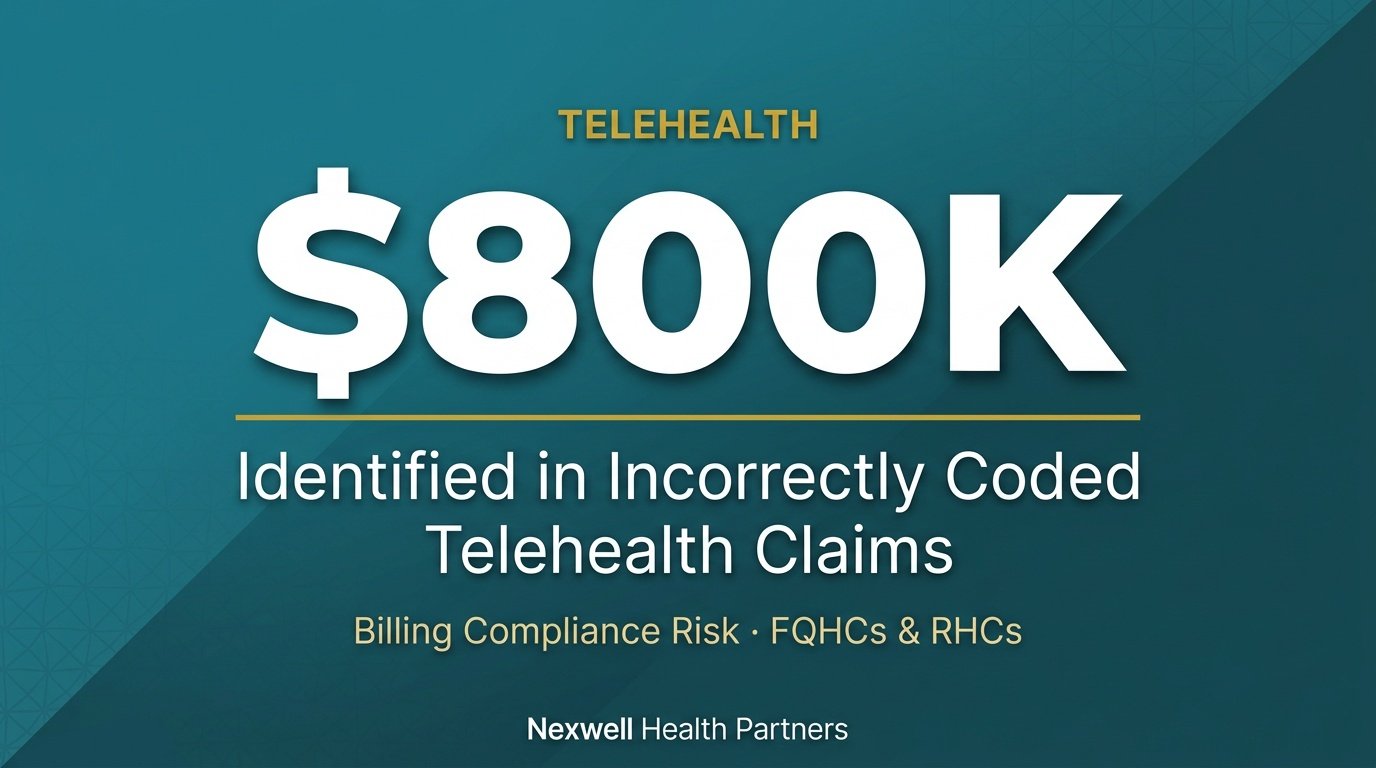
Using the wrong POS code doesn’t just affect reimbursement. It creates a false claim. One large FQHC network identified over $800,000 in incorrectly coded telehealth claims during a voluntary self-audit in 2025. The repayment obligation and compliance remediation cost far more than the original billing error.
Mistake 2: Missing or Incorrect Modifiers
Medicare requires modifier 95 on telehealth claims to indicate the service was delivered via real-time audio-video technology. For audio-only visits, modifier FQ is required for services furnished using audio-only telecommunications.
FQHCs must also append modifier CG to indicate the service was provided in an FQHC. When a telehealth visit requires both modifiers, the sequencing matters. Modifier CG typically takes priority.
The modifier requirements change based on whether the patient is at an originating site or at home, whether the visit is audio-video or audio-only, and whether the service is an eligible telehealth service or a virtual check-in. Map your modifier logic before you see your first patient, not after your first denial.
Mistake 3: Billing for Non-Qualifying Providers
Not every provider type can bill Medicare for telehealth services at an FQHC. The distant site practitioner must be a physician, NP, PA, certified nurse midwife, clinical psychologist, clinical social worker, or other Medicare-eligible billing provider.
FQHCs sometimes use clinical pharmacists, health educators, or community health workers to conduct telehealth sessions. These visits may have clinical value, but they don’t generate a billable Medicare telehealth encounter unless they meet specific incident-to requirements or are part of a separately billable service like chronic care management.
Before expanding your telehealth provider roster, verify each provider type’s billing eligibility under both Medicare and your state Medicaid program. The rules differ.
Building a Compliant Billing Workflow
The fix isn’t complicated, but it requires discipline. Build a telehealth billing decision tree that your coders follow for every claim. The decision points should include the patient’s location at time of service, the technology used, the provider type, the service performed, and the applicable POS code and modifier combination.
Train your coders specifically on FQHC telehealth rules, not generic telehealth billing. Run monthly audits on a sample of telehealth claims during the first year. Track denial rates by telehealth claim type and compare to your in-person denial rate.
The goal is a telehealth denial rate that matches your in-person denial rate. If it’s significantly higher, your billing workflow has a gap.
━━━━━━━━━━━━━━━━━━━━━━━━━━━━━━━━━━━━━━━━━━━━━━━━━━
Nexwell Health Partners provides management services, telehealth solutions, and compliance support for safety-net hospitals, FQHCs, and specialty practices. Contact us to schedule a consultation.
Sources