
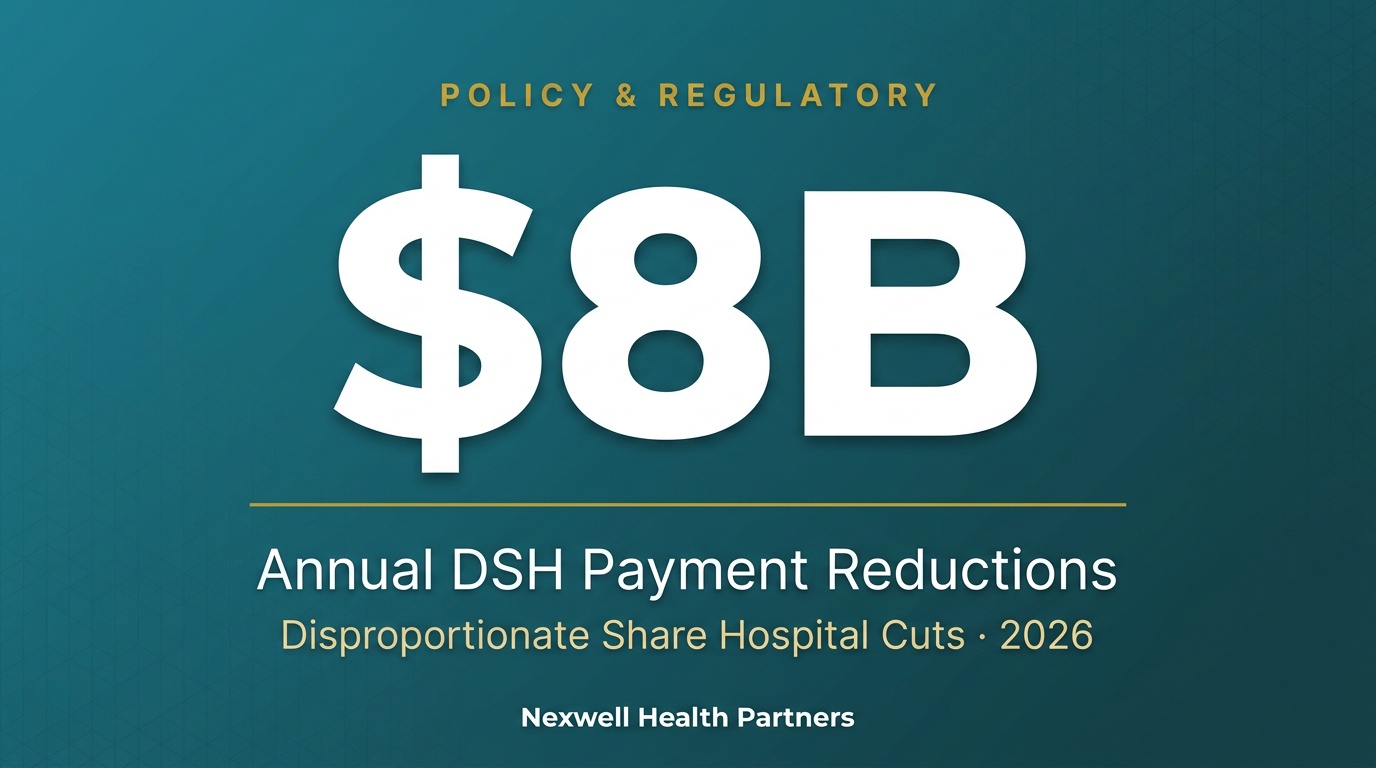
The Scale of the DSH Reduction Is Hard to Overstate
Medicaid Disproportionate Share Hospital payments exist for one reason: to keep safety-net hospitals financially viable while they serve populations that other hospitals often avoid. These payments compensate hospitals that treat disproportionately high numbers of Medicaid and uninsured patients.
Congress has authorized $8 billion in annual DSH payment reductions that are now taking effect under the Consolidated Appropriations Act. For hospitals already operating on razor-thin margins, this is not a policy abstraction. It is an existential financial threat.
The reductions were originally scheduled to begin years ago but were repeatedly delayed. That delay period is over. Hospital leaders who have been planning around the assumption that Congress would continue to postpone the cuts now need a different strategy.
How the Reductions Are Distributed
CMS distributes the DSH reductions across states using a formula that considers uninsured rates, Medicaid coverage levels, and hospital-specific uncompensated care data. States with higher uninsured populations bear proportionally larger cuts.
The state-level reductions then flow to individual hospitals through each state’s Medicaid DSH allotment methodology. This means the impact varies significantly depending on where your hospital operates. A DSH hospital in a Medicaid expansion state may experience smaller cuts than a comparable hospital in a non-expansion state, because expansion reduced the uninsured population and therefore the state’s DSH allotment reduction factor.
Hospital administrators need to model the specific impact on their facility using their state’s methodology, not rely on national averages. The difference between a 5% and 15% DSH payment reduction is the difference between manageable adjustment and financial crisis.
Legislative Prospects for Relief
A bipartisan group of senators has been working on 340B and DSH reform legislation, but formal bills have stalled repeatedly. The central disagreements involve how to define eligible patients, whether to tighten eligibility for off-site clinics, and how to balance hospital and manufacturer interests.
Hospital advocacy organizations continue to lobby for delays or reductions in the cut schedule. But given the current federal budget environment and competing spending priorities, hospital leaders should plan as if the full reductions will take effect on schedule.
This does not mean advocacy is futile. Hospital associations should continue to press Congress, and individual hospitals should engage their representatives with facility-specific impact data. But operational planning cannot depend on legislative rescue.
Operational Strategies to Offset the Revenue Loss
The most immediate lever is revenue cycle optimization. DSH hospitals frequently have denial rates above 10% and days in A/R exceeding 50. Improving these metrics through dedicated RCM support can recover millions in revenue that partially offsets DSH reductions.
Cost management is the second lever. MSO partnerships reduce administrative overhead by centralizing functions like billing, credentialing, compliance, and IT across a network of facilities. The economies of scale that an MSO provides are difficult for standalone hospitals to replicate.
Diversifying revenue streams is the third lever. Telehealth expansion, value-based care contracts, 340B program optimization, and specialty service line development all create revenue sources that are independent of DSH payments. Hospitals that depend heavily on a single payment stream are inherently vulnerable.
Strategic network development is the fourth lever. Partnerships between DSH hospitals and FQHCs create referral networks that improve patient access, reduce emergency department utilization, and position both organizations for value-based care success. These partnerships also strengthen the case for continued DSH funding by demonstrating coordinated care delivery.
The Time to Act Was Yesterday
DSH hospitals that wait for legislative certainty before making operational changes are taking an unnecessary risk. The hospitals that come through this period intact will be the ones that strengthened their operations while advocating for policy relief.
Revenue cycle improvement, cost reduction through partnership, and revenue diversification are not responses to DSH cuts. They are best practices that happen to also insulate your hospital against the specific financial shock of reduced DSH payments.
Start the analysis now. Model the impact. Identify the operational improvements that generate the fastest return. The $8 billion reduction is real, and the timeline for preparing is shorter than it appears.
━━━━━━━━━━━━━━━━━━━━━━━━━━━━━━━━━━━━━━━━━━━━━━━━━━
Nexwell Health Partners provides management services, telehealth solutions, and compliance support for safety-net hospitals, FQHCs, and specialty practices. Contact us to schedule a consultation.
Sources