
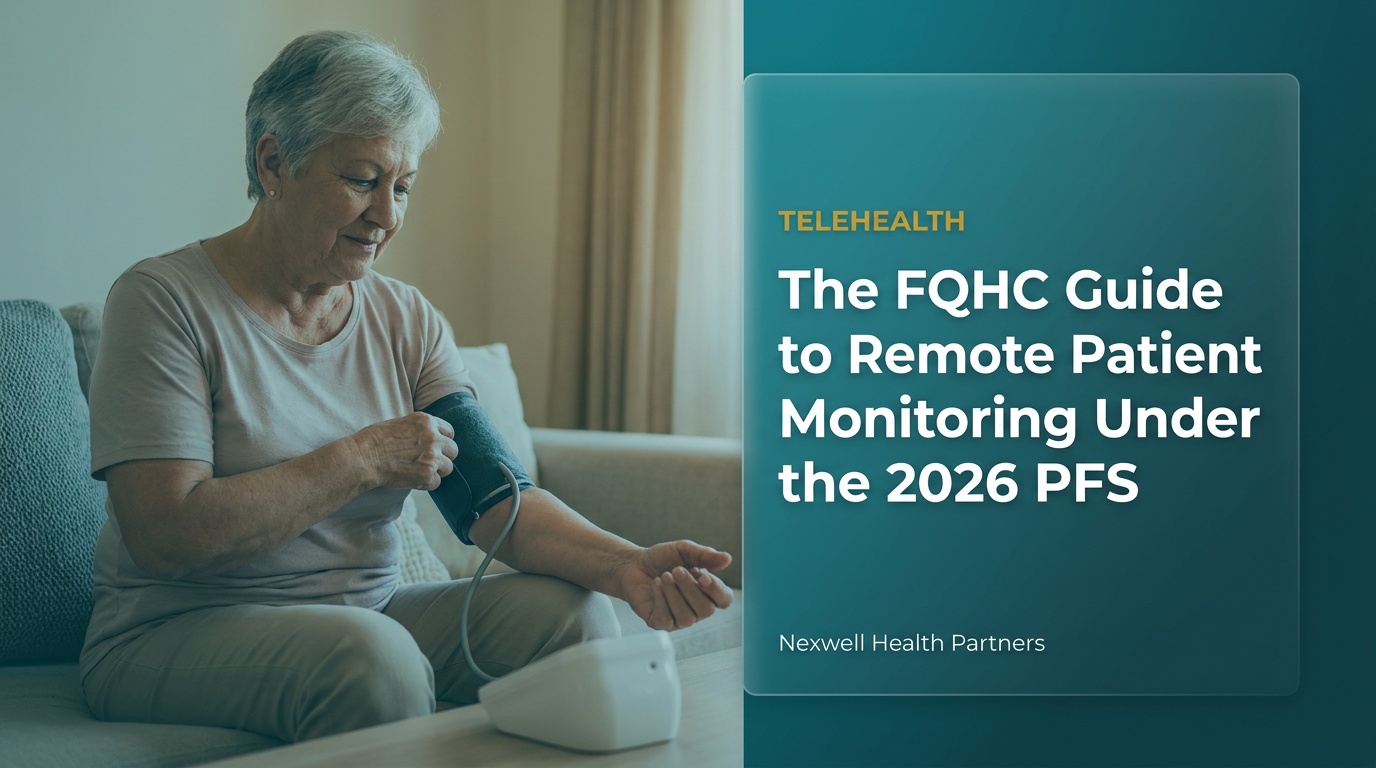
Remote Patient Monitoring Is No Longer Optional for FQHCs
The shift toward value-based care and population health management has made Remote Patient Monitoring (RPM) essential for FQHCs managing chronic disease populations. Diabetes, hypertension, COPD, and behavioral health conditions all benefit from continuous monitoring between visits. And CMS has created reimbursement pathways that make RPM financially viable for community health centers.
But the coding and billing landscape changed significantly with the 2026 Physician Fee Schedule, and FQHCs that have not updated their RPM workflows are at risk of leaving revenue on the table or, worse, submitting non-compliant claims.
What Changed in the 2026 PFS for RPM
CMS has continued to refine the RPM code set, building on changes that began with the sunsetting of the FQHC-specific G0511 bundled payment code for certain chronic care management services. FQHCs now bill RPM services using the standard CPT code framework that applies to all Medicare providers.
The core RPM codes remain CPT 99453 (initial setup and patient education), 99454 (device supply with daily recordings), 99457 (first 20 minutes of clinical staff time per calendar month), and 99458 (each additional 20 minutes). FQHCs billing under the Prospective Payment System (PPS) need to understand how these codes interact with their encounter-based payment methodology.
The key distinction: RPM services billed under 99457 and 99458 represent clinical staff time that may qualify as a billable encounter under FQHC PPS rules when specific documentation requirements are met. This means RPM can generate PPS-rate encounters without requiring the patient to physically visit the health center.
Building a Compliant RPM Program
Start with patient identification. RPM is most effective and most reimbursable for patients with chronic conditions requiring ongoing monitoring. Diabetes, hypertension, and heart failure patients are the most common RPM candidates, but behavioral health monitoring is an emerging use case.
Next, select your monitoring devices and vendor platform. The device must transmit data automatically to qualify for CPT 99454. Manual patient reporting does not meet the code requirements. Choose FDA-cleared devices that integrate with your EHR and provide secure, HIPAA-compliant data transmission.
Staff training is critical. Clinical staff must document their time reviewing RPM data and communicating with patients. The 20-minute minimum threshold for 99457 billing applies per calendar month, not per interaction. Staff should use time-tracking tools that capture minutes spent on RPM activities for each patient.
Documentation must demonstrate medical necessity for RPM, patient consent, device setup and education, daily recording transmission, and clinical staff review and intervention. Missing any element creates audit risk.
The Financial Impact for FQHCs
For an FQHC managing 200 RPM patients, the revenue potential is significant. CPT 99454 generates approximately $62 per patient per month for device supply. CPT 99457 generates approximately $50 per patient per month for the first 20 minutes of clinical staff time. Combined, that is roughly $112 per patient per month, or approximately $268,000 annually for a 200-patient panel.
When RPM encounters also qualify for PPS-rate billing, the financial impact increases further. The PPS rate for an FQHC visit averages approximately $180-$210, depending on geographic adjustment.
These numbers make RPM one of the highest-ROI clinical programs an FQHC can implement, provided the operational infrastructure supports compliant billing.
Common Mistakes to Avoid
The most expensive RPM billing mistake is failing to meet the 16-day device transmission requirement for CPT 99454. The device must transmit data for at least 16 days in a 30-day period. If patient adherence drops below that threshold, you cannot bill the code for that month.
Another common error is billing 99457 without adequate time documentation. General chart notes are not sufficient. You need time-stamped records showing at least 20 minutes of RPM-related clinical activity per patient per month.
Finally, do not overlook state Medicaid RPM policies. While Medicare RPM billing is standardized nationally, Medicaid programs vary significantly by state. Some state Medicaid programs have adopted Medicare RPM codes; others have not. FQHCs with significant Medicaid populations should verify coverage before enrolling patients.
Building RPM infrastructure right the first time, with compliant technology, trained staff, and proper documentation, prevents costly rework and positions your FQHC for the value-based care future that CMS is actively incentivizing.
━━━━━━━━━━━━━━━━━━━━━━━━━━━━━━━━━━━━━━━━━━━━━━━━━━
Nexwell Health Partners provides management services, telehealth solutions, and compliance support for safety-net hospitals, FQHCs, and specialty practices. Contact us to schedule a consultation.
Sources